Matter Gallery Residency
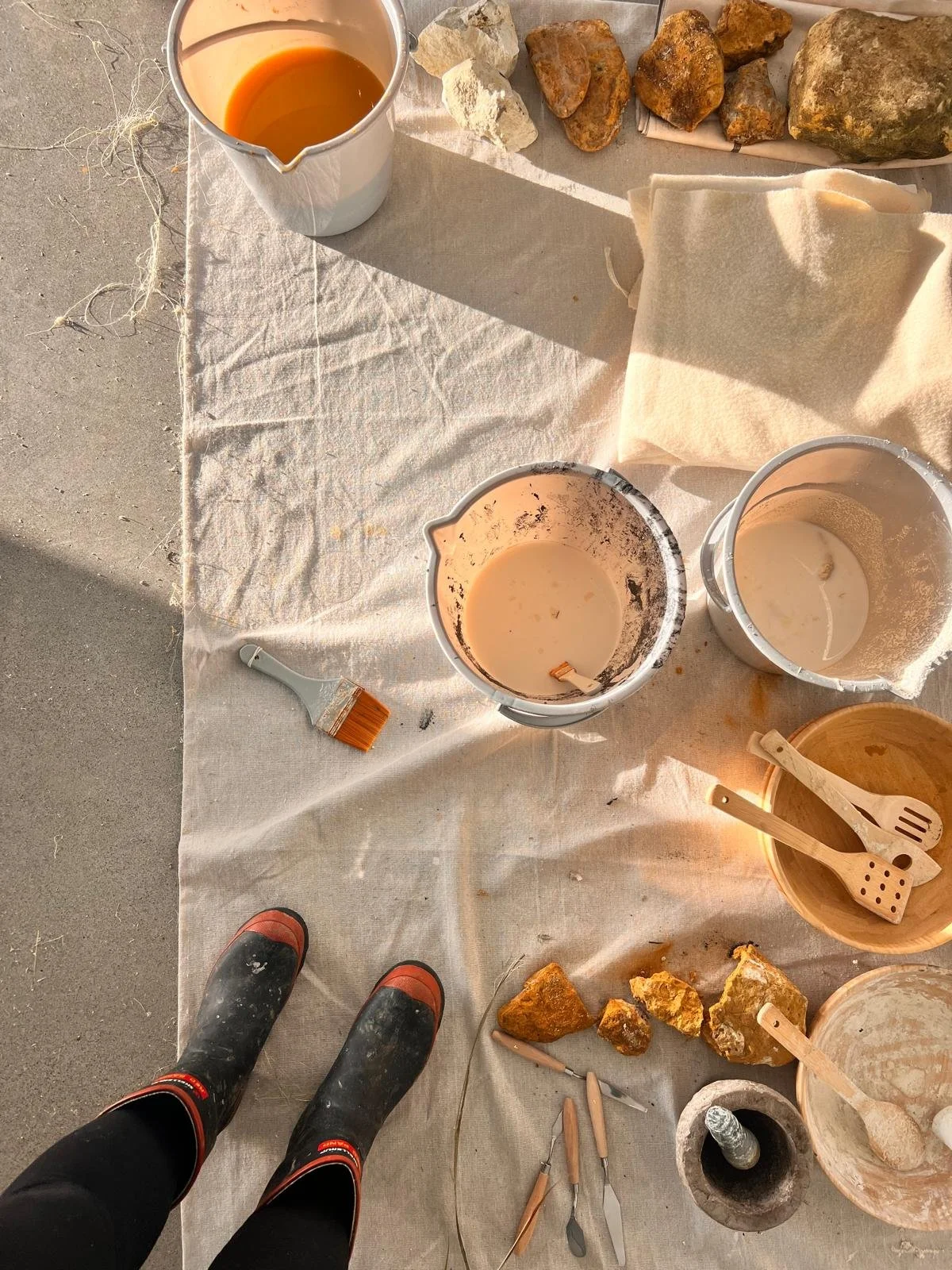
In September, I applied for a two-week residency at Matter Gallery, and by October I was standing inside that light-filled space.
The residency was part of Ecosophy 2025 — a gathering of artists exploring the entanglement of ecology, philosophy, and creative process.
During the residency, I created several new works that extended from my ongoing exploration of whakapapa and whenua as both material and methodology.
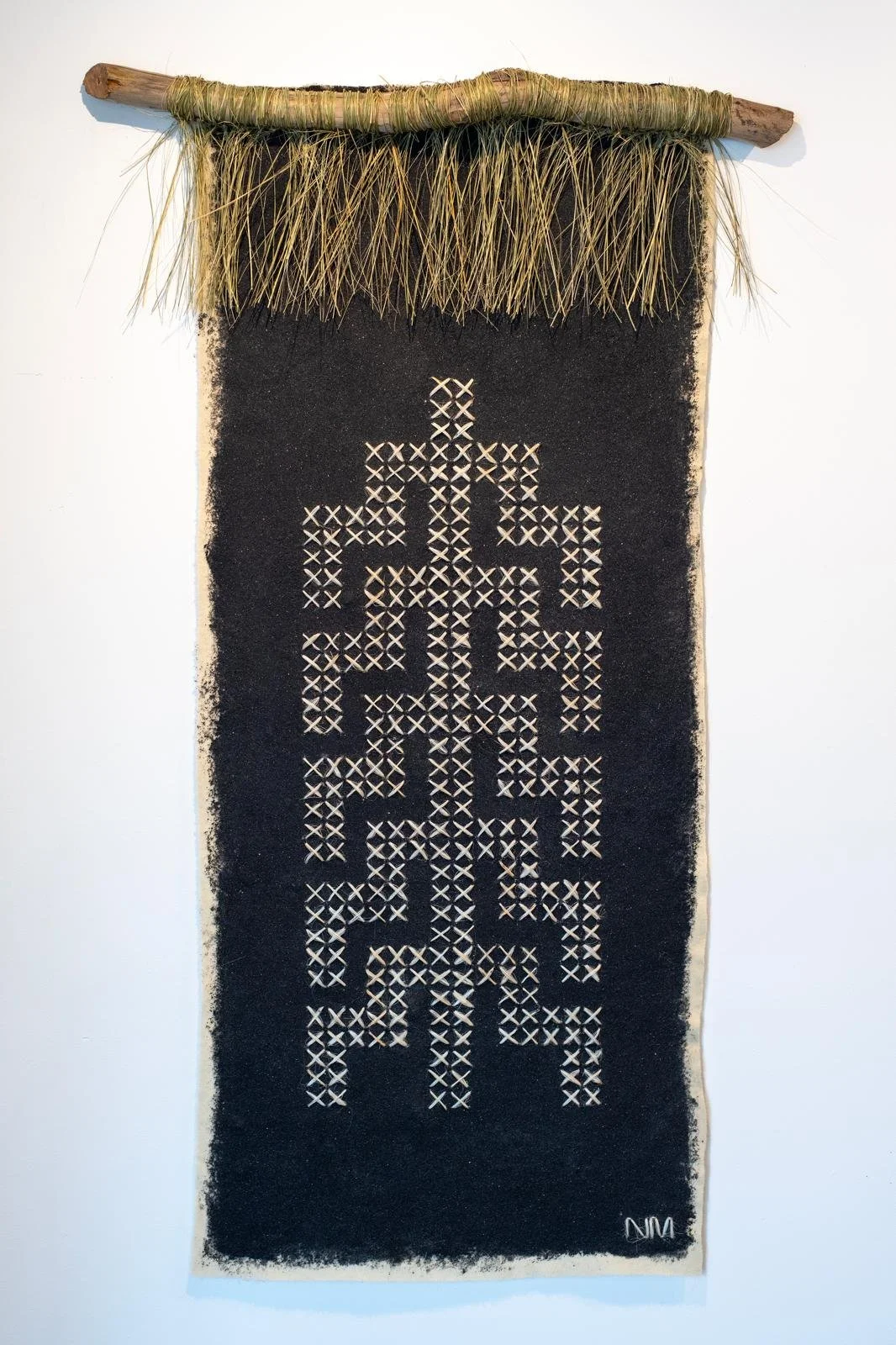
The central piece, Poutama o Ōruarahi, was woven from muka and layered with black sand (onepū rino) gathered from directly below our marae. The stepped poutama pattern — inspired by the tukutuku panels of Ōruarahi Marae — symbolises growth, learning, and ascent. Working on a larger scale, the process felt like a dialogue between fibre and tide, between the histories held in sand and the stories rising through the pattern.
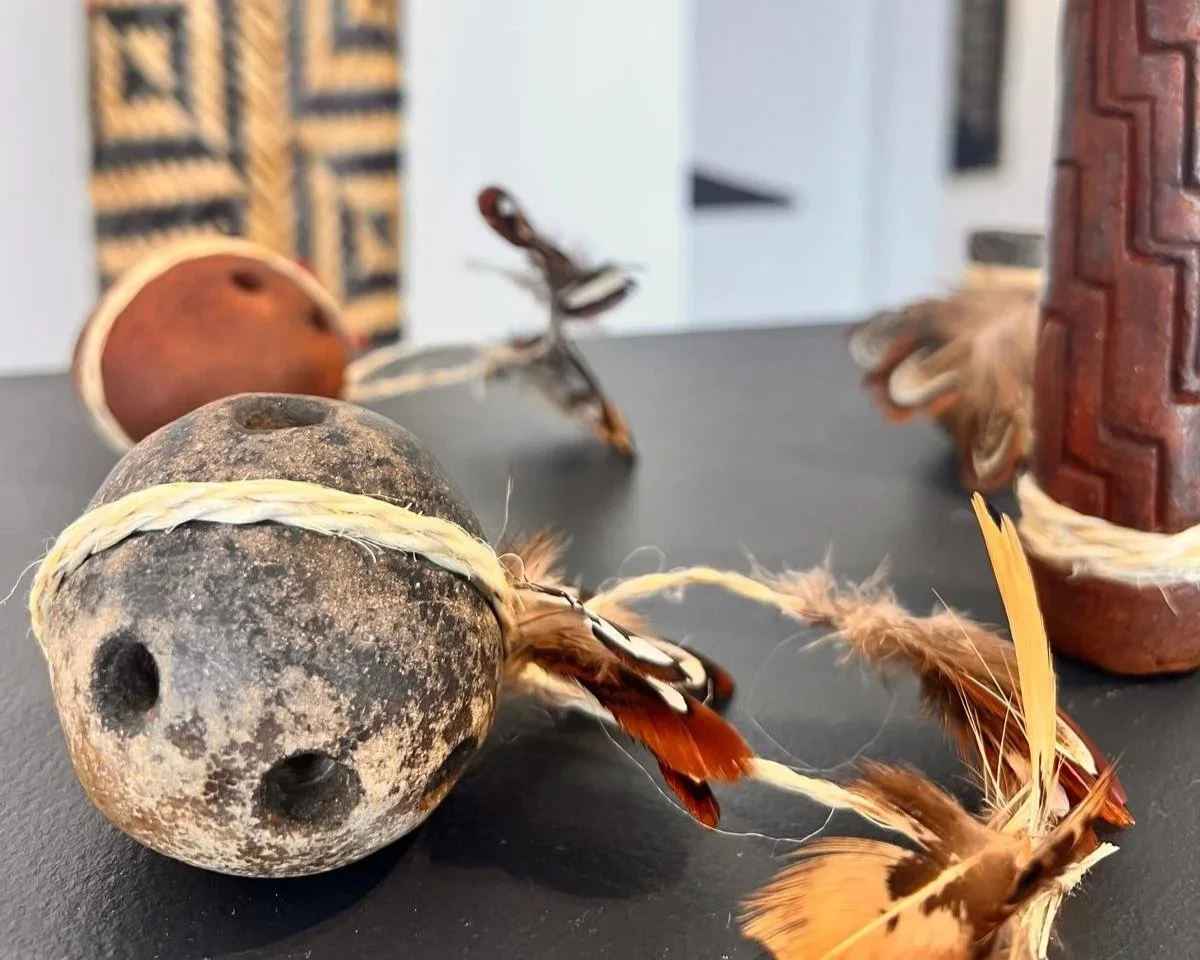
Alongside this work, I produced four taonga pūoro — all made from Matakana Island clay that I had gathered, processed from rock, and wood-fired at home. Each instrument seemed to carry a voice of its own, a resonance that belonged as much to the island as to the maker.
We Remember Pukehinahina
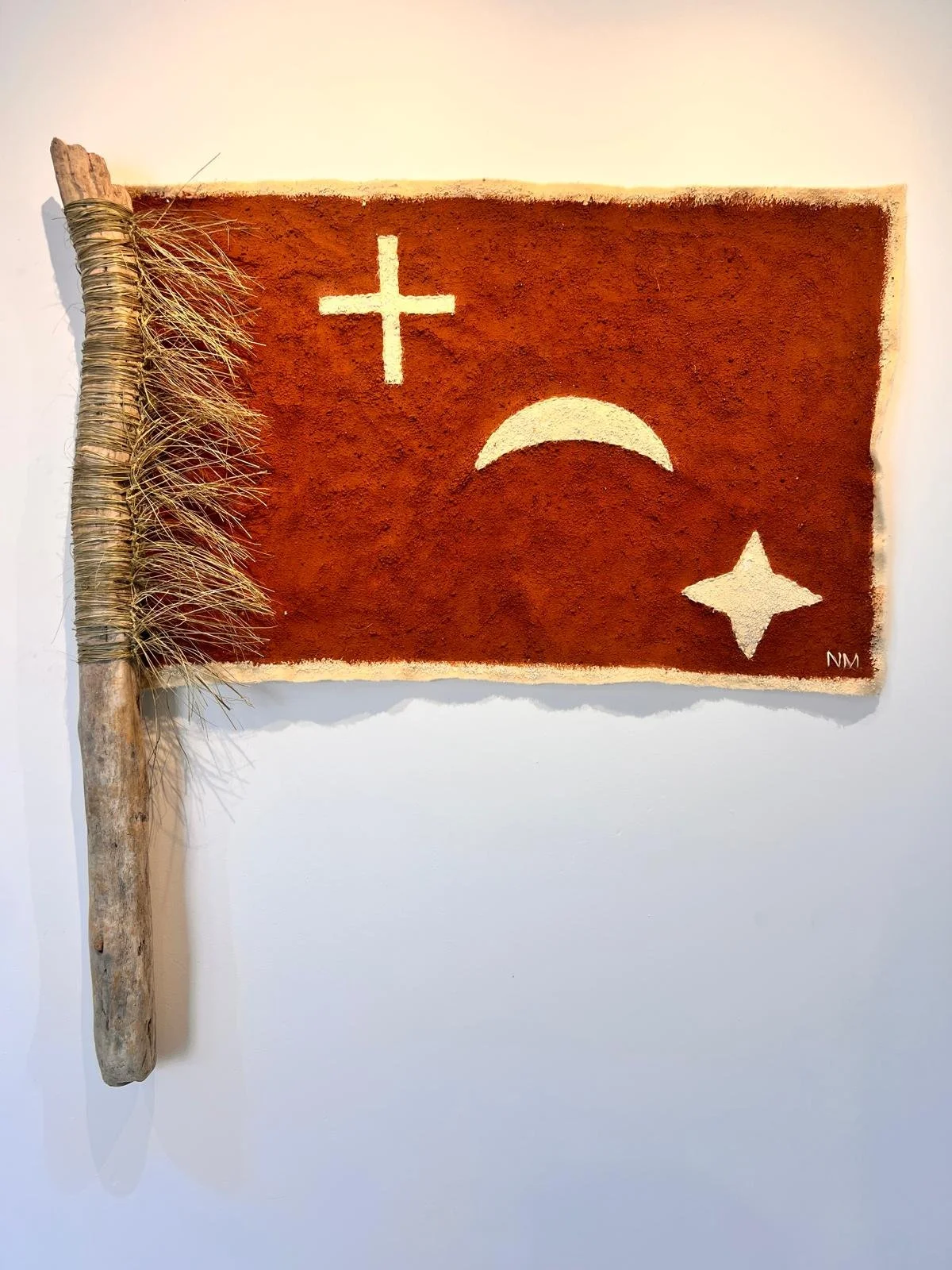
I also created a protest flag using whenua — a replica of the Pukehinahina battle flag, honouring Henare Taratoa and my tīpuna, Taiaho Hōri Ngātai.
This work is a mihi to our tīpuna who fought at the Battle of Pukehinahina — in particular my great-great-great-great-grandfather Taiaho Hōri Ngātai and his comrade Henare Taratoa, who wrote the Code of Conduct and placed the Star of Bethlehem on the battle flag as a reminder that the battle should be fought with dignity and compassion. Only our tīpuna upheld that code.
Henare Taratoa was also among the original tīpuna who contributed koha toward the purchase of the land in Matakana upon which Ōruarahi Marae now stands — a connection that binds our marae to this legacy of courage and integrity.
Each of these works — the stitched blankets, the clay instruments, the whenua flag — felt like threads in a single woven breath. None were made specifically for my MFA final installation, yet each one nourished it. The residency gave me space to move without pressure, to follow the materials wherever they led, and to listen again to the land that shapes my making.
Looking back, I realise how essential this time was. It reminded me that my practice is not only about outcomes, but about relationship — with whenua, with whakapapa, and with the unseen conversations between them.